
School of Intuitive Herbalism
Learning from the plants directly

Foundation Year – Earth
This is a year devoted to you deepening your relationships with the plants. It is designed as the first year of a training, followed by either an integration year or the Heart year, but can also be taken as a stand-alone year.
We meet in a small group throughout the year, learning about the herbs around us as they grow through the changing seasons. This is a highly experiential course, combining time outdoors with the plants with practices that develop our ability to listen to both the plants and our own intuition. Working with a number of different techniques including meditation, journeying, plant consciousness explorations, somatic awareness (through somatic and bodywork practices) and group plant meetings, we learn how to open ourselves to a deep understanding of the qualities of plants and how they affect our bodies and consciousness.
The course is about learning about herbalism from the herbs upwards. Although this is a training rather than a therapeutic programme, plant meetings and body-based practices can sometimes invite deep personal processes. Our application and interview process helps us explore whether applicants have suitable experience of inner work and access to appropriate support. The course is not a substitute for therapy or medical care.
Through in-depth meetings with around twenty plants we aim to touch on:
- The art of dreaming and journeying, and exploring how the liminal world intersects with the physical world.
- Learning by initiation – letting the plants teach you directly by recognising the invitations, projections and doorways that emerge through relationship and understanding how to step into deeper relationship through this process.
- The wisdom within – coming into deeper relationship with the intelligence of our bodies and hearts, as well as our innate seership, and developing greater skillfulness in each realm. We develop three distinct modes of perception and insight (Somatic, Heart & Seership), exploring each of these in depth, help you find where your strengths and blind spots are and see how they can work together (or sometimes against each other!) to bring greater depth to each.
- Innate ancestral wisdom – We explore the ancestral and cultural roots of healing and herbalism in Britain. Although many of these traditions have been disrupted or lost, strong traces remain in our bodies, communities, landscapes, stories and relationships with plants. We explore how these traces appear within liminal spaces and how they might be rekindled and translated into skills relevant to everyday life.
- Embodied and systemic trauma and its significance to growth and healing – the plants help us recognise what we carry within, what we carry from the past and what is still very much alive today in our culture.
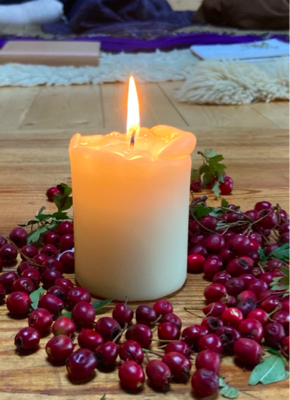
- Ritual and ceremony with the plants – exploring how very simple intentional ritual spaces can open potent doorways.
- Developing our relationship with our sensitivity and exploring how to discern projection from insight and gnosis. Recognising how our innate sensitivity may have existed in states of overwhelm or shutdown for much of our lives and how to come into deeper relationship with it.
- Working with listening touch – a very simple style of touch we’ve developed in the school whereby we learn how to let the plants guide affect our perceptions and sense as well as how we touch. Each plant offers a different mode of perception, giving different insights, whilst the somatic co-regulation of touch combined with working with plant consciousness invites the plants deeper into our bodies.
- Exploring the nature of self initiation and how it relates to projection, perception and the choice to step into the doorways that the plants present to us. We would expect most people to experience several powerful plant initiations over the course of the year.
- To deepen your relationship with your own body and being within nature – with specific initiations in ancient, sacred spaces local to Stroud woven into the year
- For those who are ready to – start offering case studies (with supervision).
Themes specific to herbalism include:
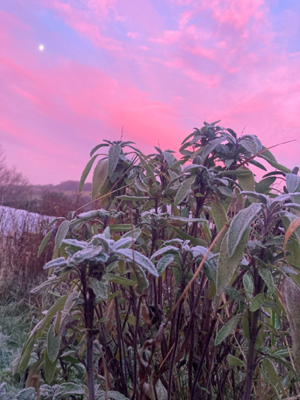
- To positively identify at least twenty medicinal plants growing locally
- To become familiar with each herb’s growing season and appropriate methods of harvesting.
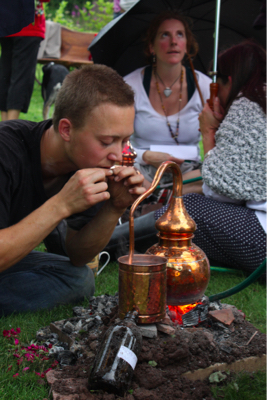
- To explore medicine preparations including decoctions, tinctures, infused oils, ointments and the distillation of hydrosols.
- To have a grounding in some traditional naturopathic modes of medical knowledge
- To start to learn how to assess contraindications and cautions for using herbs
- To build deeper relationships with around five plants, based on individual exploration, journeying and research
- To feel confident in starting and developing a relationship with a plant on your own
- To develop confidence in exploring plant dream-time and liminality through imaginative and drum-led journeying, and to become familiar with the roles of ritual, ceremony and initiation.
A certificate of completion outlining the skills you have gained is available on request at the end of the year.
For latest information about dates and financial exchange click this link.
We very much encourage those wishing to join the school to read this page reflecting on your own inner resources and support network. From 2027, our extended intake process will explore this in greater depth, helping us consider whether applicants have access to a level of support appropriate to their individual needs.
The vast majority of those who join the Foundation year have done either the in-person Introduction or 1:1 tutorials – those who have already started some work with us in this form are given priority should they wish to continue their exploration.
This interactive graphic below shows how the Foundation and Hearth years fit into the school as a whole: